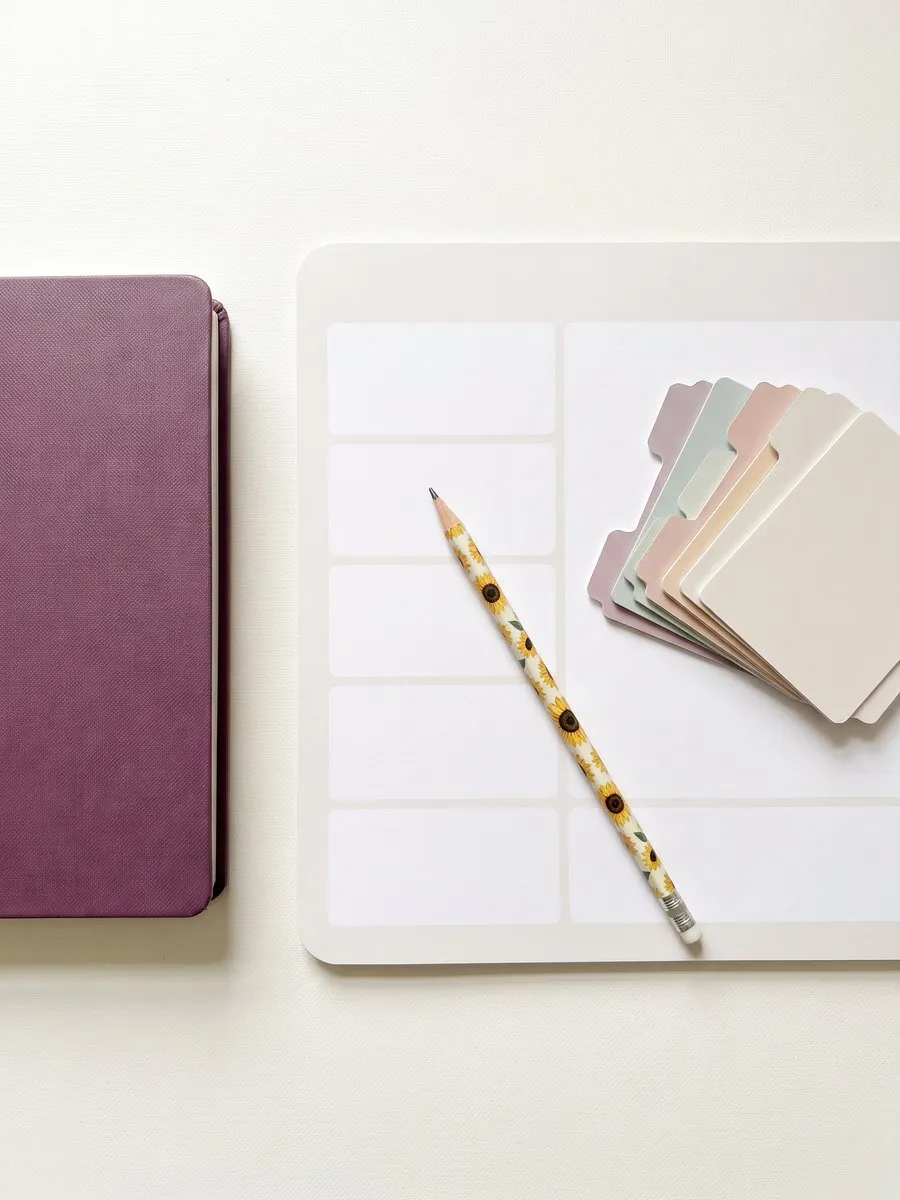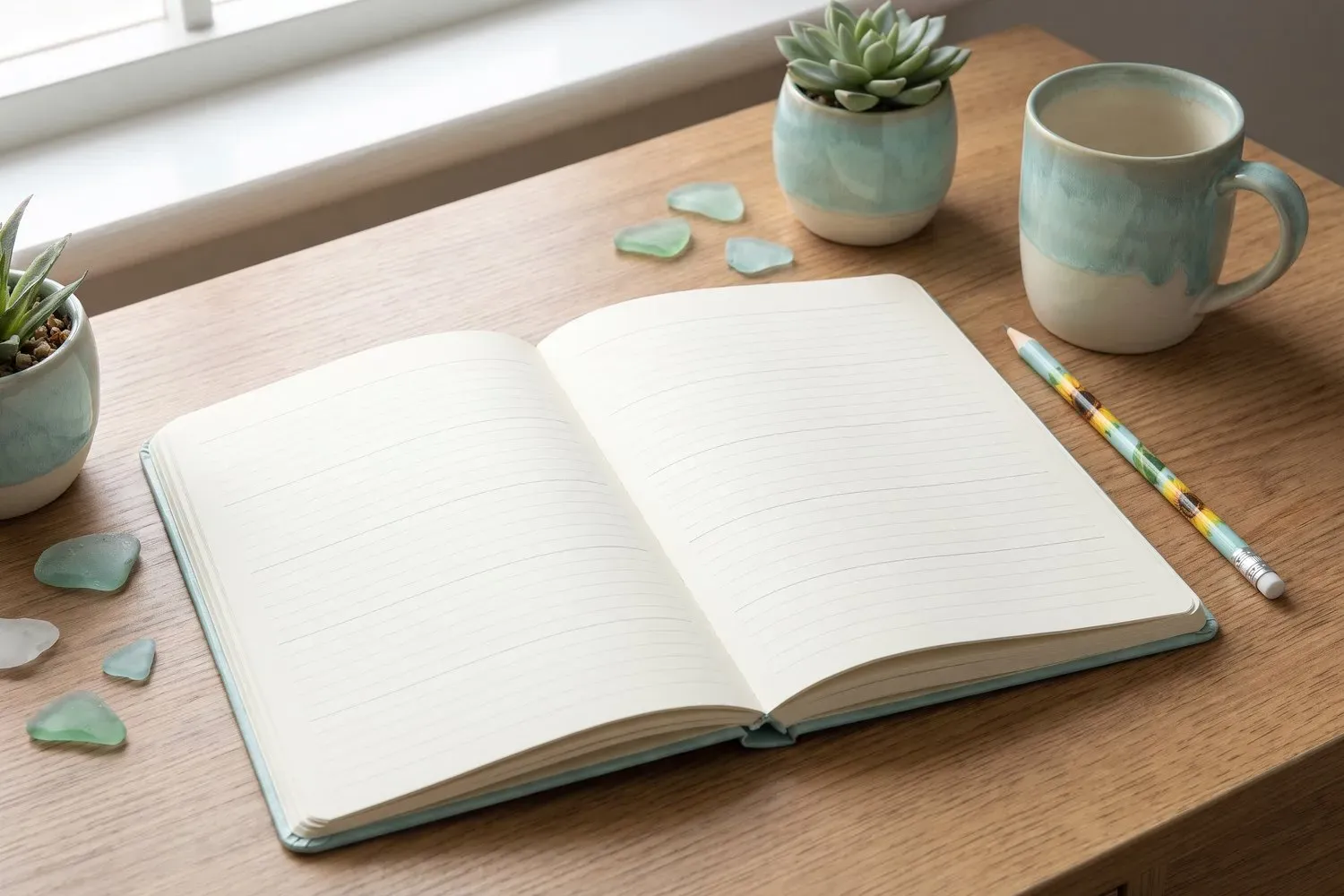
We plan a week on a single page because a week is short enough to hold in your head and long enough to get away from you. A one page view keeps the whole shape visible: the fixed things, the work you want to move forward and the small jobs that fill the gaps. The aim is not a perfect schedule. It is a page you can read at a glance on Monday and still trust on Friday.
Start with the fixed points
Begin with what cannot move. Appointments, school runs, shifts, travel and the classes you have already paid for all go in first. Put them in their real places on the page rather than a list at the top, because seeing them where they fall shows you the true shape of the week. Leave the rest of the page for choices. When the fixed points are clear, the open hours stop feeling like a vague promise and start looking like usable time.
We like to mark fixed points in one colour and keep everything else in pencil. The colour says do not move this. The pencil says this is still a decision.
Choose three things that matter
A week can carry three real priorities, not ten. Pick the three pieces of work or home life that would make the week feel worthwhile if they were done, and give each one a block of time. Everything else on the page is a smaller task that fits around them. This is the part most planners get wrong: they fill the page with small jobs and leave no room for the thing that actually needed the week.
Write the three priorities as verbs, not wishes. Draft the kitchen plan is easier to start than kitchen. A verb tells you what the first ten minutes look like.
Leave room for the week to breathe
An honest week has gaps in it. Leave one afternoon or a pair of evenings unplanned, and resist the urge to fill them when Tuesday looks quiet. Those gaps absorb the delays, the extra call and the appointment that runs long. A page with no slack is a page that fails the first time something changes, and something always changes.
Keep a small corner for notes that arrive during the week. A single box at the side is enough. Anything that needs a real decision goes there and waits for Friday, rather than pushing today around.
Review on Friday, not Sunday
Ten minutes on Friday is worth more than an hour on Sunday. Look back at what actually happened, not what you planned. Move anything unfinished to next week with a clear note about why it slipped. If the same task moves three weeks running, it is either too big or not important, and the page has told you so.
- Write the fixed points in first, in their real places.
- Name no more than three priorities for the week.
- Leave one afternoon or two evenings open.
- Keep a side box for notes and decisions.
- Review on Friday and carry the rest forward.
A week on one page will not make the week predictable. It will make it easier to see, and a week you can see is a week you can steer. Every Folio download has a free sample page, so you can try the layout for a week before you commit to a full set.