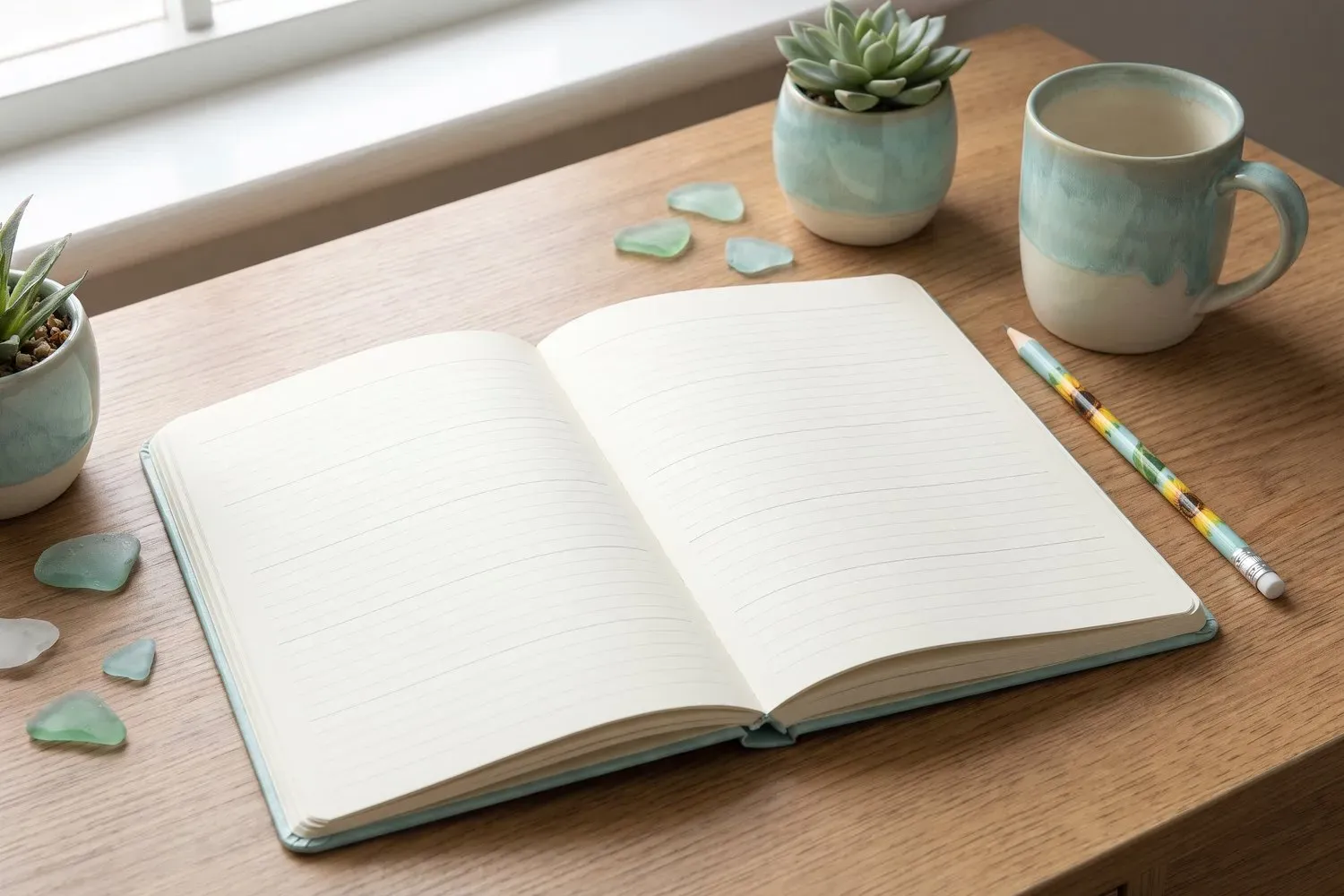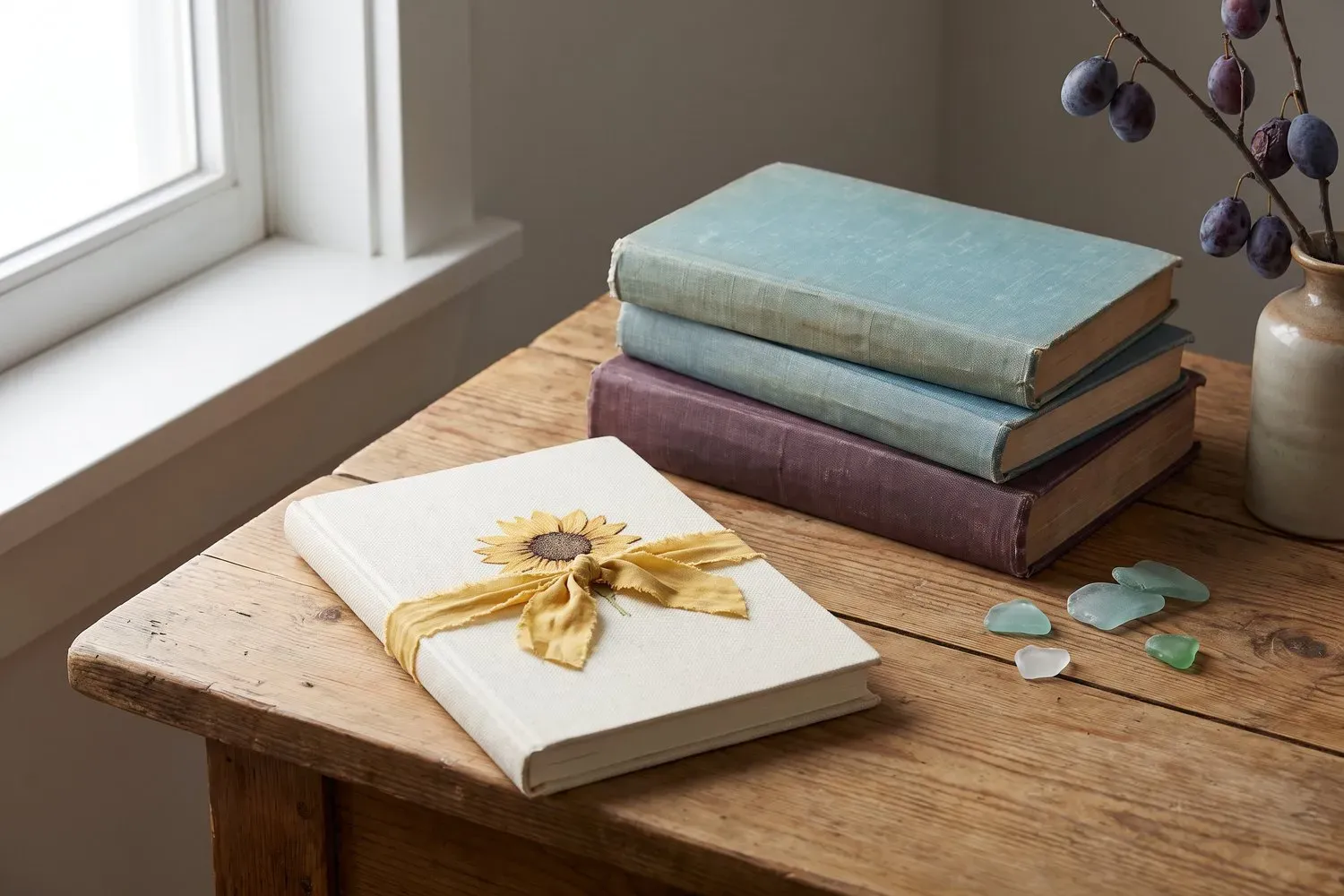
A reading journal works best when it is not a book report. The point is to keep a record of what a book did to you while it was open, in a form you will still enjoy reading in a few years. Twelve prompts are enough to start. Use them loosely, skip the ones that do not fit and let the same few carry a whole month.
Before you start
Write the title, the author, the date you began and one sentence about why you picked the book up. That first line is often the most interesting entry later. If it was a gift, a recommendation or an impulse from a shelf, say so. The circumstances are part of the reading.
Twelve prompts to keep nearby
- Which sentence made you stop and read it twice?
- Where were you when the book first caught you?
- Which character would you like to argue with?
- What did the book make you remember?
- Which place in it would you like to visit?
- What did you expect that did not happen?
- Which idea will you still be turning over next week?
- What did the book do with silence or pauses?
- Which passage would you read aloud to someone?
- What did it change your mind about, even slightly?
- Who would you pass this book to, and why?
- What will you look for in the next book you read?
Prompts for the last pages
When you finish, write one paragraph without stopping. Say what the book was about in your own words, then say how you felt at the end. Do not try to be fair. A journal is a record of one reader at one moment, and that is more useful than a balanced review. If you disliked it, write that down with the same care. Dislike is information.
Leave a space for the date you finished. A page of finished dates, read months apart, becomes a quiet map of the year.
How to keep it going
Keep the journal where you read rather than where you tidy. A single page per book is enough, and a short entry is better than a blank page you meant to fill properly. If a prompt does not suit the book, move to the next one. The journal is a conversation with your own reading, and conversations do not follow a form.
Keep it beside the chair where you read, not on the shelf where you keep tidy things. Write one line at the start and one paragraph at the end, and record the finish date every time. Reread an old entry now and then. Those small habits do more for the journal than a beautiful notebook ever will.
Over a year, the prompts matter less than the habit. The entries you thought were slight are often the ones that bring the book back most clearly. A page written in five minutes can hold the whole weather of a week, and a shelf of those pages becomes a record of the reading year.